







International Day of Non-Violence
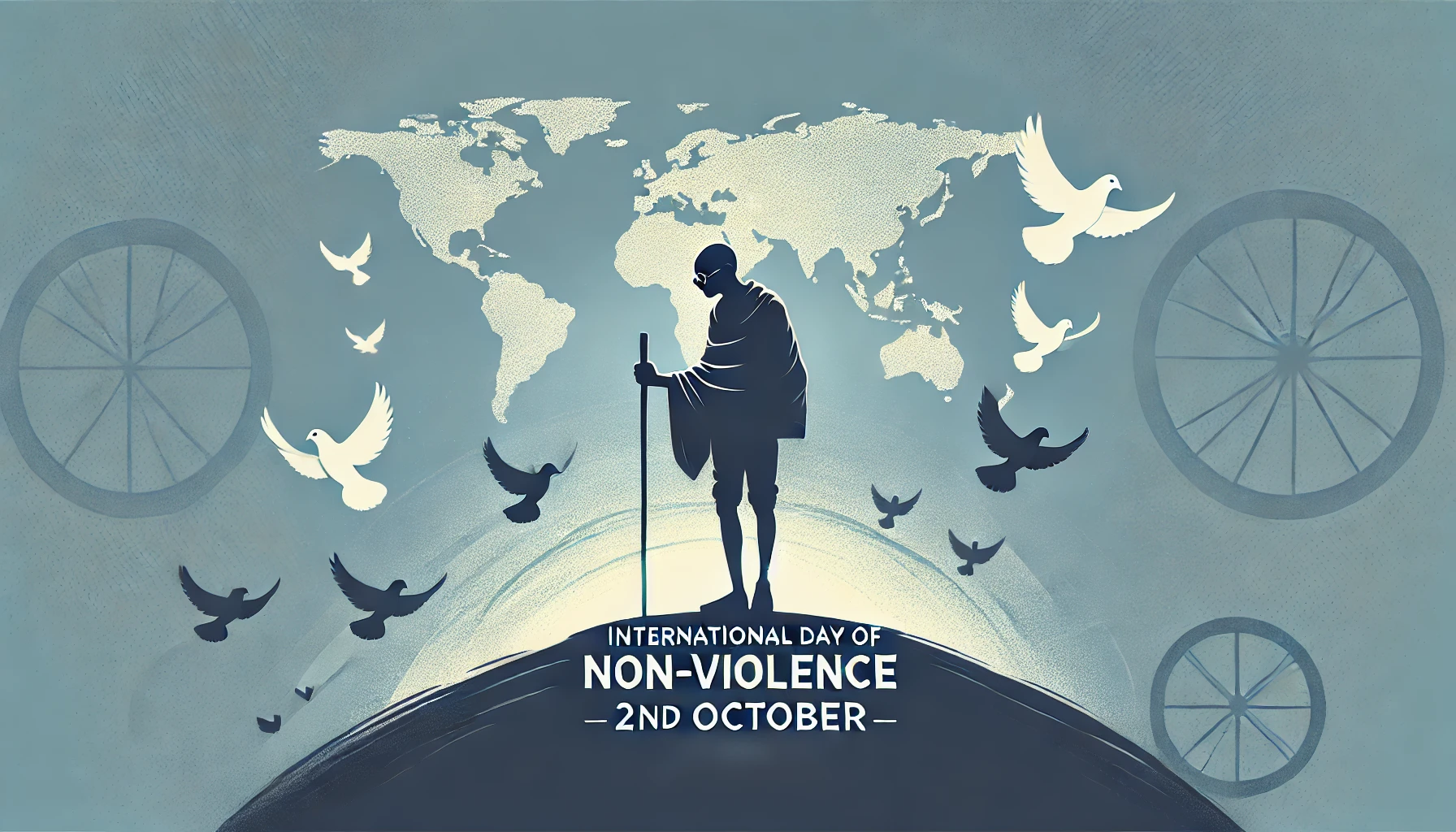
International Day of Non-Violence
The International Day of Non-Violence is celebrated on October 2, marking the birthday of Mahatma Gandhi. As the leader of the Indian independence movement, Gandhi pioneered the philosophy and strategy of non-violence, influencing global movements for peaceful protest. This day honors his legacy and the ongoing impact of non-violent resistance around the world.
Overview and Purpose
October 2nd of every year is celebrated as the birth anniversary of Mahatma Gandhi, a revolutionary leader who led people by example of nonviolence and peaceful resistance in his freedom struggle with the British for India's independence. Annually, this day is also celebrated as International Day of Non-Violence, through which awareness is brought about on the effectiveness of peaceful protests done with solidarity to ensure peace, conflict resolution, and progress is achieved socially and politically.
Historical Background
In 2007, the United Nations General Assembly conceived the International Day against Violence to promote global nonviolence as the primary resort to resolve social conflicts. The UN General Assembly also sought to honour Gandhi's role in establishing nonviolence as a form of resistance to ensure civil rights and freedom is obtained peacefully.
The Concept of Non-Violence
Definition and Principles
Nonviolence refers to social, political and cultural change without physical force. At the heart of the philosophy are principles such as compassion, truth, and moral courage. It encourages individuals to confront injustice not with violence, but with tolerance, dialogue, and peaceful protest.
Historical Roots of Non-Violence
The idea of non-violence is deeply rooted in various spiritual traditions, including Hinduism, Buddhism, and Christianity. However, the modern political application of non-violence was significantly shaped by Gandhi's leadership in India's struggle for independence from British rule. Influences also came from philosophers such as Leo Tolstoy and civil rights movements like those led by Martin Luther King Jr. in the United States.
Prominent advocates of nonviolence
In addition to Gandhi, individuals such as Nelson Mandela, Martin Luther King Jr., and the Dalai Lama are major proponents of nonviolence. Each demonstrates how peaceful processes can lead to profound social change, suggesting that the absence of violence is not a sign of weakness, but of strength.
International Festival of Non-Violence
Global Concepts and Applications
Each year, International Day of Violence is celebrated with events promoting peace, reconciliation and dialogue. Governments, NGOs and communities around the world host conferences, workshops and discussions that emphasise the importance of nonviolence in conflict resolution.
How to get involved
Individuals can also participate in the day by attending community events, participating in peace walks, or talking about nonviolence in contemporary world Social media campaigns using the hashtag #InternationalDayOfNonViolence online platform to spread awareness.
Educational and Community programmes
Schools, universities and community centres often run educational programmes on non-violence, teaching younger generations conflict resolution techniques, the history of peaceful protest and the importance of tolerance and respect in interpersonal relationships.
The Impact of Non-Violence Movements
Historical Examples of Non-Violence
Some of the most profound changes in history have occurred through non-violent movements. The Indian Independence Movement led by Gandhi, the Civil Rights Movement in the United States under the leadership of Martin Luther King Jr., and South Africa's anti-apartheid struggle led by Nelson Mandela are all testaments to the power of peaceful resistance.
Modern Movements and Their Achievements
In recent times, non-violent movements continue to shape global politics. The Arab Spring, the Women's March, and climate change protests led by youth activists like Greta Thunberg are few examples of how peaceful demonstrations can raise awareness and foster change in today's world.
Non-Violence in Different Cultures
Nonviolent practices in different cultures
Many religions and philosophies preach nonviolence though put forth differently depending on the culture. Hinduism follows the concept of 'Ahimsa' while Buddhism preaches general Compassion for all beings. Christianity teaches love and forgiveness as Pacifism in the Western World.
Cultural definitions of nonviolence
Cultural definitions of nonviolence vary, but the basic message remains consistent: to seek peaceful conflict resolution. In Japan, for example, post-World War II society adopted the idea of ??peace as a national policy, reflected in Article 9 of its constitution, which rejects war. Similarly, in the West, Quakers are known for their commitment to peace and social justice.
Challenges to Promoting Non-Violence
Obstacles and Resistance
One of the primary challenges in promoting non-violence is the notion that it's miles ineffective in accomplishing fast results. In the international front, where diplomacy loses face value with the end result being wars, regulated through violence and aggression, non-violent approaches may be visible as passive or susceptible, and those who advocate for them can face opposition or ridicule.
Strategies to Overcome Challenges
To triumph over these challenges, schooling and public awareness campaigns play a crucial position. Highlighting successful examples of non-violent resistance and fostering speak on the blessings of non violent conflict resolution are crucial techniques. Encouraging governments and institutions to help non-violent projects can also create an environment in which peaceful techniques are valued.
Non-Violence and Conflict Resolution
Approaches to Resolving Conflicts Peacefully
Peaceful conflict resolution involves techniques like negotiation, mediation, and dialogue. These approaches aim to resolve disputes without escalating tensions and often lead to more sustainable and long-term solutions than violent confrontations.
Examples of Successful Conflict Resolution
Historical examples of successful conflict resolution through non-violence include the end of apartheid in South Africa and the Good Friday Agreement, which brought peace to Northern Ireland. These examples demonstrate how dialogue, diplomacy, and patience can overcome deep-seated divisions.
Role of Education in Promoting Non-Violence
Incorporating Non-Violence in Educational Curricula
Teaching non-violence from an early age helps to instill values of empathy, tolerance, and respect. Schools around the world are beginning to incorporate lessons on peaceful conflict resolution, social justice, and the importance of dialogue into their curricula.
programmes and Initiatives in Schools
Many schools conduct programmes that focus on restorative justice which is essentially damage control i.e. repentance for the crime by fixing the mistake rather than punishing offenders, as part of a general side effect of non-violence. These initiatives teach children that conflicts can be resolved through discussion and understanding rather than through aggression or retaliation.
The Future of Non-Violence
Emerging Trends and Innovations
The future of non-violence lies in harnessing the power of technology and social media to spread awareness and mobilise peaceful movements. Online platforms have the potential to bring together like-minded individuals from across the globe to advocate for change in ways that were previously unimaginable.
Vision for a Non-Violent World
A future where non-violence is the default approach to conflict resolution would be a world that prioritises peace, justice, and equality. While this vision may seem idealistic, the success of past and present non-violent movements proves that peaceful approaches can and do make a difference.
FAQs About International Day of Non-Violence
What is the significance of the International Day of Non-Violence?
The International Day of Non-Violence highlights the importance of using peaceful means to resolve conflicts and achieve political and social change, inspired by the life and teachings of Mahatma Gandhi.
How can individuals participate in the International Day of Non-Violence?
People can participate by attending peace walks, joining educational programmes, and promoting non-violence through social media using hashtags like #InternationalDayOfNonViolence.
What are some key historical examples of non-violence?
Historical examples include the Indian Independence Movement, the Civil Rights Movement in the U.S., and South Africa's anti-apartheid struggle.
How can non-violence be promoted in schools?
Non-violence can be promoted by incorporating lessons on empathy, tolerance, and peaceful conflict resolution into the curriculum, as well as through restorative justice programmes.
What are the challenges to promoting non-violence?
Common challenges include societal perceptions of non-violence as weak or ineffective, as well as resistance from those who benefit from violent conflict.
Conclusion
To conclude, the International Day of Non-Violence reminds us of the persistent effect of peaceful resistance. By promoting education, encouraging dialogue, and being a part of community programmes, we can all contribute to a more just and non-violent world.











































0 Comments