The IBCP Reflective Project: A Comprehensive Guide
Introduction
The IBCP Reflective Project is the backbone of the International Baccalaureate Career-related Programme (IBCP). This is supposed to enable students to reflect an ethical dilemma relating to an issue in their career-related studies CRS at hand. The project gives the students a chance to exercise critical thinking, research and writing skills as presented on real issues in the world.
What is the IBCP Reflective Project?
Focus: The core of the project is an examination of the ethical dilemma involving the career chosen by the student. It invites students to analyse different perspectives regarding the issue and reflects on how those perspectives apply to ethical principles.
Research-Based: It involves independent research that will be applied as support in presenting arguments and providing grounds for debate on the ethical dilemma.
Structure: The Reflective Project may be presented in a range of formats; it might be a written essay of around 3,000 words; it could also be a slideshow with accompanying supporting documents or a video with a script.
Assessment Criteria
Identification of the Ethical Dilemma: It has to clearly identify and discuss the ethical problem.
Research and Critical Evaluation: It has to demonstrate evidence of research and critical evaluation of different perspectives.
Personal Reflection: The students are encouraged to reflect on one's beliefs and learning journey while doing the assignment.
Organisation and Communication: The assignment must be well-structured and ideas presented in a coherent manner while appropriately cited.
How to Succeed in the Reflective Project
Pick a Meaningful Ethical Problem: Choose a problem that grabs your attention and connects to your career studies. The more you care about the issue the more your project will shine with depth and insight.
Do Your Homework: Look into the topic using trusted sources. Find different views on the ethical problem and use this info to back up your points.
Keep a Level Head: While it's good to share your thoughts, make sure you look at all sides of the story. Talk about other views and explain why you agree or don't agree with them.
Think Hard: Look at the ethical problem. Think about why it's right or wrong, and why people might see it. Consider how ethical ideas apply to the situation.
Start Early: Make a plan to finish each part of your project, from looking things up to writing it all down. Don't wait until the last minute. You'll need time to look over your work and make it better.
Ask for Help: Talk to your teachers or advisors often to see how you're doing. They can tell you where to improve and make sure you're on track.
Give Credit Where It's Due: Use the right citation formats to give a nod to your sources. This will boost your project's trustworthiness and keep you clear of copying others' work.
Be Open in Your Thoughts: When you're looking back on your work, be straight about what you've picked up, how your ideas have grown, and any hurdles you've jumped. This will reveal the depth and growth in your thinking.
Conclusion
The IBCP Reflective Project is your opportunity to explore a significant ethical issue in your career related field. Success will come from selecting a meaningful topic, doing some quite solid research, and coming up with a well-structured and balanced analysis. Through these means, by critical thinking, personal reflection, and organisational skills, you'll produce a project that evidences your academic and personal growth.
0 Comments
About the Author
Knowledgeum Academy
Knowledgeum is a hub for research, practice, and continuous learning where the teaching-learning process leads to useful knowledge creation.
It integrates its extensive expertise in educational design with organised programme delivery to prepare learners for academic, professional, and societal impact. Knowledgeum embraces universal skills and advocates the view that everyone should unite in a relentless pursuit of excellence by being adaptable and effectively applying their learning in a changing world.
IB student explains how to check the validity of your LPG Cyclinder?| Best IB Schools
Grade: DP2
Summary
Learn how to decode the markings on your LPG cylinder for safety, including gas types, testing quarters, and expiration dates.
Highlights
LPG is widely used for cooking and heating.
Color codes indicate gas type: red for propane, blue for butane.
Letters represent quarters of the year for testing.
Digits indicate the year of testing due.
Example: A25 means testing due in Q1 2025.
Understanding these markings is crucial for safety.
Stay curious and decode your surroundings!
Key Insights
LPG Usage: Liquefied petroleum gas is a common fuel source, highlighting its importance in daily life and the need for safe usage practices.
Color Codes: The red and blue colours are not just for aesthetics; they provide essential information about the type of gas, helping users choose the right one for their needs.
Quarterly Testing: The letter codes signify testing periods, encouraging regular checks to ensure safety and compliance with regulations.
Expiration Dates: The digits following the letters inform users when the cylinder needs to be tested, preventing potential hazards from expired equipment.
Real-World Application: Understanding these markings can prevent accidents and ensure proper handling, emphasizing the importance of safety education.
Safety Awareness: Recognizing the significance of these codes fosters a culture of safety and diligence among LPG users.
Curiosity in Learning: Encouraging curiosity about everyday objects can lead to a better understanding of their use and safety, empowering individuals to make informed decisions.
IB Student Explains the Meaning Behind Pin Codes | Best IB School
Grade: DP2
Summary
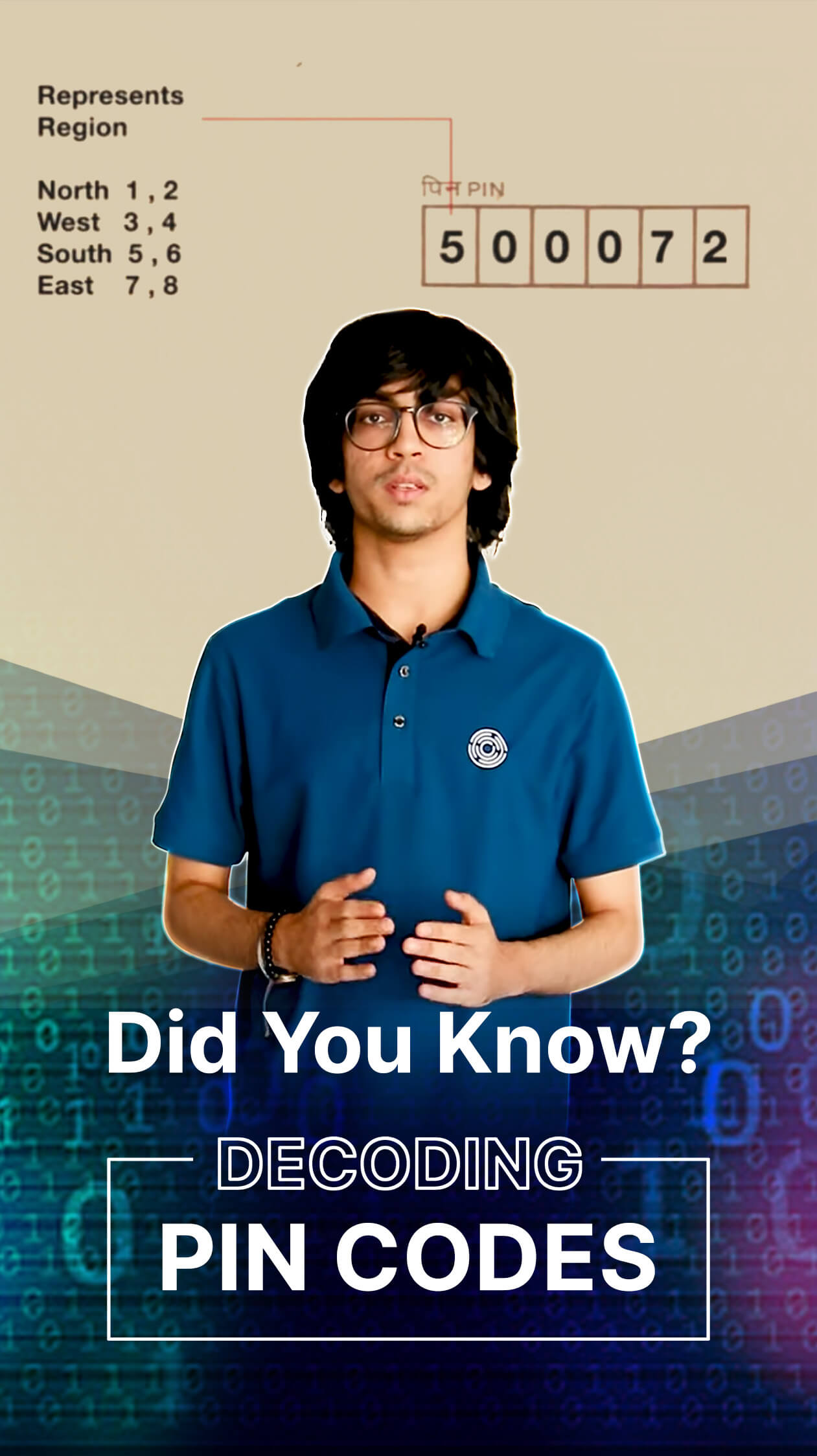
The six digits of a PIN code ensure accurate mail delivery in India, indicating region, state, district, and specific post office.
Highlights
PIN code stands for Postal Index Number.
First digit shows the region of India.
Second digit narrows it down to a state or Union territory.
Third digit identifies the specific district.
Last three digits specify the individual post office.
Ensures mail is directed to the correct location.
Now you know the meaning behind those six digits!
Key Insights
Importance of PIN Codes: Understanding PIN codes is crucial for efficient mail delivery, ensuring no delays or misdirections occur.
Geographical Significance: The first digit’s regional classification helps postal services manage logistics effectively across India’s vast territories.
State Identification: The second digit serves as a vital tool for sorting mail at the state level, enhancing organizational efficiency.
District Precision: The third digit plays a critical role in pinpointing districts, facilitating quicker sorting and delivery processes.
Local Post Offices: The last three digits uniquely identify post offices, ensuring that mail reaches the right local destination without errors.
Enhanced Mail Services: A well-structured PIN system improves overall mail services, contributing to better customer satisfaction.
Knowledge is Power: Understanding how PIN codes work empowers individuals to send and receive mail more effectively, enhancing communication.
The Truth Behind Pseudo-Pricing in Just One Minute by IB Student
Summary
Pseudo pricing tricks consumers into thinking they’re getting discounts by inflating original prices, leading to unwise purchasing decisions.
Highlights
Flashy Discounts: Stores attract customers with eye-catching sale signs.
Inflated Prices: Original prices are manipulated to create a false sense of savings.
Checkout Shock: Customers often discover the final price is higher than expected.
Informed Consumers: Knowledge is crucial for navigating retail traps.
Price Comparison: Always compare prices before making a purchase.
Read Reviews: Customer feedback can reveal true product value.
Avoid Temptation: Resist the allure of seemingly amazing deals.
Key Insights
Perception vs. Reality: Pseudo pricing plays on consumer psychology, making perceived savings more enticing than actual value. This leads to impulsive buying.
Value Awareness: Understanding how businesses market products helps consumers make informed choices and avoid overpaying for items.
Research Matters: Conducting thorough research can help identify genuine discounts versus marketing gimmicks, enhancing overall purchasing power.
Online Tools: Utilize price comparison websites and apps to verify product prices across different retailers, ensuring you get the best deal.
Consumer Reviews: Reviews provide insight into product performance and value, helping consumers make more informed decisions beyond just price.
Mindful Shopping: Being cautious and reflective during shopping can prevent buyer’s remorse and foster smarter financial habits.
Empowerment Through Knowledge: Staying informed about pricing strategies and market trends can empower consumers to make savvy purchasing decisions.
John from Knowledge Academy explains the meanings of different email domain suffixes, helping viewers understand their significance.
Highlights
".com" indicates commercial use by businesses.
".in" is India's country code for email origin.
".biz" signifies a business-oriented domain.
".net" originally for tech but now for anyone wanting a cool domain.
".org" represents nonprofits and organizations making a difference.
".edu" is dedicated to educational institutions.
Understanding these suffixes enhances email communication.
Key Insights
Commercial Relevance: The ".com" domain is ubiquitous, signifying a website's commercial intent, making it essential for businesses looking to establish an online presence.
Geo-Specific Identification: Country code domains like ".in" offer insight into the geographical origin of the email, which can be significant for contextual communication.
Business Identity: ".biz" domains explicitly convey a focus on business, helping users identify professional entities quickly.
Networking Evolution: ".net" originally for tech companies reflects the evolution of online identity, now catering to a broader audience seeking unique domain names.
Nonprofit Engagement: The ".org" domain highlights organizations dedicated to causes, fostering trust and engagement in community-driven initiatives.
Education Focus: The ".edu" suffix is exclusive to educational institutions, ensuring credibility in academic communications and resources.
Email Literacy: Understanding these domains empowers users to navigate digital correspondence more effectively, enhancing overall communication skills.
From Yellow to Orange: The Stories Behind Indian Milestone Colors
Summary
Indian milestones feature vibrant colors, each representing different road types, highlighting cultural and historical significance in connectivity and development.
Highlights
Yellow band: Represents National highways, connecting cities and states.
Green band: Signifies State highways, aiding regional development.
Black band: Marks District roads, linking neighborhoods and urban infrastructure.
Orange band: Indicates Village roads, ensuring local accessibility.
Colors reflect India’s diverse landscapes and connectivity.
Milestones tell a unique story of progress and unity.
Understanding these colors enhances appreciation for Indian infrastructure.
Key Insights
National Highways (Yellow): These roads are crucial for inter-state connectivity, promoting economic growth and cultural exchange across vast distances.
State Highways (Green): They facilitate movement within states, playing a key role in regional development and supporting local economies.
District Roads (Black): Essential for urban infrastructure, these roads connect different neighborhoods, enhancing accessibility and daily commutes for residents.
Village Roads (Orange): Vital for rural connectivity, these roads ensure that development reaches the most remote areas, fostering inclusivity and growth.
Color Significance: Each color is a visual representation of the type of road, helping travelers easily identify their surroundings and navigate better.
Cultural Narrative: The colors of the milestones reflect India’s diverse cultural landscape, telling stories of connectivity and infrastructure evolution.
Development Indicator: The presence of these roads and their respective colors indicates the level of development and connectivity in various regions of India.
Unveiling the Secret Code: How Your Power Button Works
Summary
The power button symbol represents binary code, where the circle is zero and the line is one, powering up devices through a binary command.
Highlights
Symbol Meaning: The power button is more than a design; it’s a code.
Binary Language: Computers use binary (0s and 1s) for communication.
Circle & Line: The circle signifies zero, and the line represents one.
Power Command: Pressing the button sends a binary command to the device.
Digital Connection: Using the power button connects us to the digital world.
Binary Magic: Powering up unleashes the magic of binary code.
Stay Tuned: More insights are coming in the next video!
Key Insights
Symbolism: The power button’s design is intentional, representing fundamental binary concepts crucial to technology.
Binary Basics: Understanding binary is essential as it forms the backbone of all digital processes and computing.
Design & Function: The interplay of design (circle and line) serves a functional purpose, showcasing how aesthetics can also convey technical information.
Device Interaction: Pressing the power button illustrates our active participation in the digital ecosystem, bridging human actions with machine responses.
Tech Literacy: Recognizing such symbols enhances our technological literacy, empowering users to engage more deeply with their devices.
Unlocking Potential: The act of powering up symbolizes the unlocking of potential within our devices, activating their capabilities.
Continuous Learning: The invitation to learn more reflects the ongoing journey of knowledge in technology and beyond.
The Power of Trademarks: Driving Creativity and Fair Competition
Summary
Trademarks are essential for protecting brand identity and reputation, ensuring authenticity and fair competition in today’s market.
Highlights
Trademarks guard business identity and branding.
Historical roots trace back to craftsmen’s symbols.
They act as the DNA of branding and innovation.
Exclusive rights prevent exploitation of reputation.
They incentivize creativity and originality.
Promote fair competition among businesses.
Ensure consumers receive genuine products.
Key Insights
Brand Protection: Trademarks safeguard a brand’s identity, ensuring that consumers can trust the quality and authenticity of products. This trust is foundational for customer loyalty and business success.
Historical Significance: The use of trademarks dates back to artisans who marked their goods, emphasizing quality and authenticity, which highlights the longstanding importance of branding in commerce.
Innovation Catalyst: Trademarks serve as a framework for innovation, allowing brands to build upon their unique identities and develop new products without fear of imitation.
Exclusive Rights: By securing trademarks, companies protect their hard-earned reputations, preventing others from misleading consumers and ensuring that the brand’s promise is upheld.
Creativity Incentive: Trademarks encourage creativity, motivating businesses to develop unique products and services, which ultimately benefits consumers with diverse options.
Fair Competition: Trademarks level the playing field by ensuring that all businesses compete on their merits, fostering an environment where quality and originality thrive.
Consumer Assurance: Trademarks guarantee that consumers receive the genuine article, enhancing their purchasing experience and reinforcing brand loyalty.
Unveiling the Magic of Barcodes: How They Revolutionized Retail
Summary
Barcodes, introduced in the 1970s, revolutionized inventory management and checkout processes in retail, improving efficiency and customer satisfaction.
Highlights
Barcodes are essential for nearly every product.
Introduced in the early 1970s to improve inventory management.
Automates checkout, reducing purchase chaos.
Contains unique parameters like product name and price.
Enhances accuracy in managing inventory.
Streamlines processes across various industries.
Improves customer satisfaction through efficiency.
Key Insights
The simplicity of barcodes belies their complexity, reflecting a language that machines understand, crucial for modern commerce.
Barcodes encode essential product information, allowing quick access and processing, crucial for modern retail operations.
Their introduction marked a significant shift from manual scanning to automation, reducing time and labour costs significantly.
The technology behind barcodes involves scanners that interpret light reflection, showcasing the intersection of technology and everyday shopping experiences.
Efficient inventory management via barcodes leads to better stock control, reducing waste and improving profitability for retailers.
Barcodes have transcended retail, finding applications in healthcare, logistics, and ticketing, proving their versatility.
Customer experience is enhanced as barcodes reduce wait times and errors at checkout, leading to greater satisfaction.
















































0 Comments